
Understanding the Prostate
The prostate is a small gland in the male reproductive system, located just below the bladder and in front of the rectum. It surrounds the urethra — the tube that carries urine and semen out of the body. Together with the testicles and seminal vesicles, it helps make and store semen, the fluid that nourishes and protects sperm.
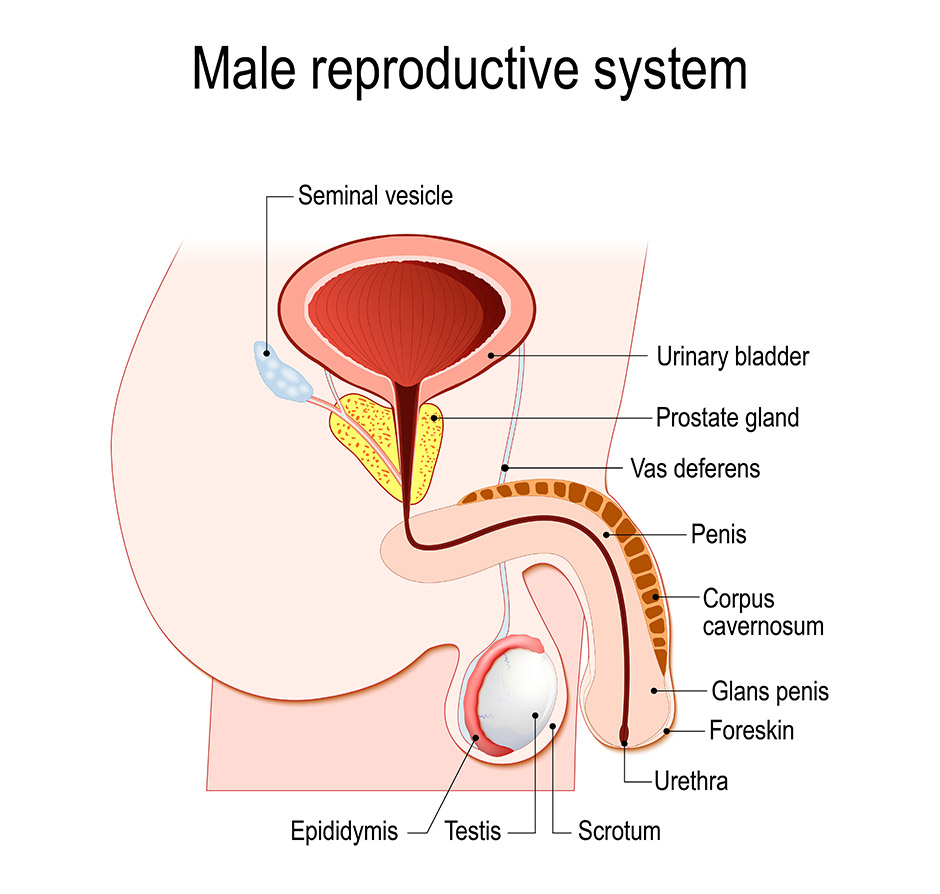
The prostate’s main job is to make some of the fluid that mixes with sperm to form semen. This fluid helps sperm survive and move during ejaculation. The hormone testosterone, produced mainly in the testicles, controls prostate growth and function throughout life.
In younger men, the prostate is about the size of a walnut. As men age, it often grows larger — a condition called benign prostatic hyperplasia (BPH). This is not cancer, but the enlarged gland can press on the urethra and cause urinary symptoms such as weak flow, difficulty starting, or needing to urinate frequently at night.
Prostate cancer occurs when abnormal cells develop within the prostate gland and begin to grow uncontrollably. It is one of the most common cancers in men. Many cases grow slowly and cause no symptoms for years, while others are more aggressive and spread quickly. Early detection is key — talk with your doctor about regular testing and your personal risk.